20 Years in Numbers
Twenty years of impact can’t be captured by numbers alone, but they offer a window into the journey - the progress made, the challenges faced, and change along the way.
Behind every statistic is a human experience which isn’t shared here, but together, these numbers offer a snapshot of how far the organisation has come, and where it could go next - none of it possible without the clients who back the mission, the charities who walk alongside it, and the crew who bring the work to life every day.
Here are the headlines.
Social Impact
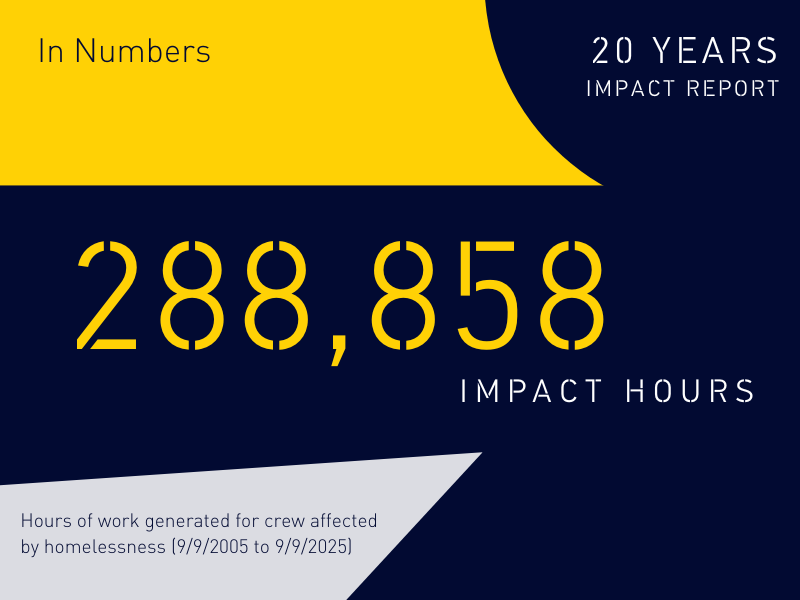
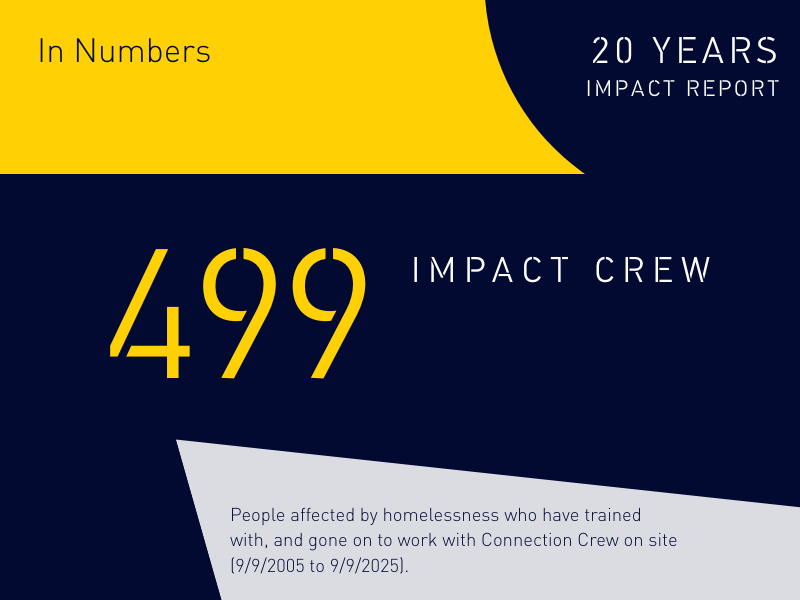
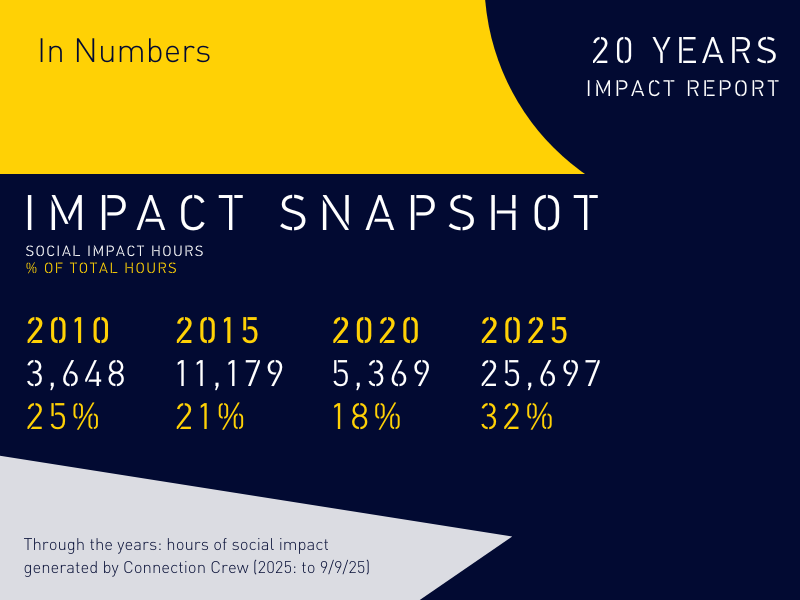
Connection Crew’s first job was on 9th September 2005 at the Natural History Museum, the following data is up to 9th September 2025.
Academy
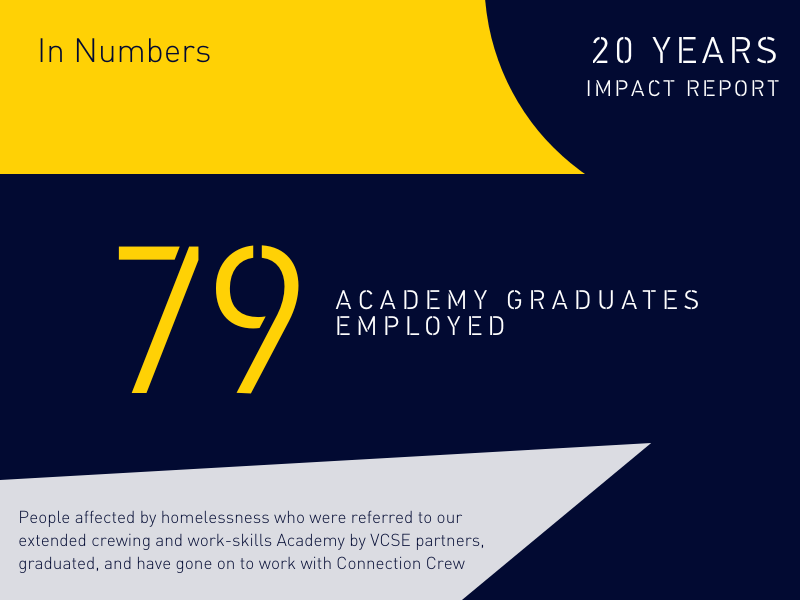
The Academy was piloted in 2015, with a couple of iterations tested after and fully taking off in its current format in 2021 - 79 Academy graduates have been employed by Connection Crew to date.
Journey to Net Zero
Net Zero means that you are putting no more carbon into the atmosphere than you are taking out of it.
Back in 2015, we were awarded Carbon Smart Gold Award, their highest award. And yet it wasn’t until 2020 that we would say we truly began our journey to Net Zero, setting our target for 2030.
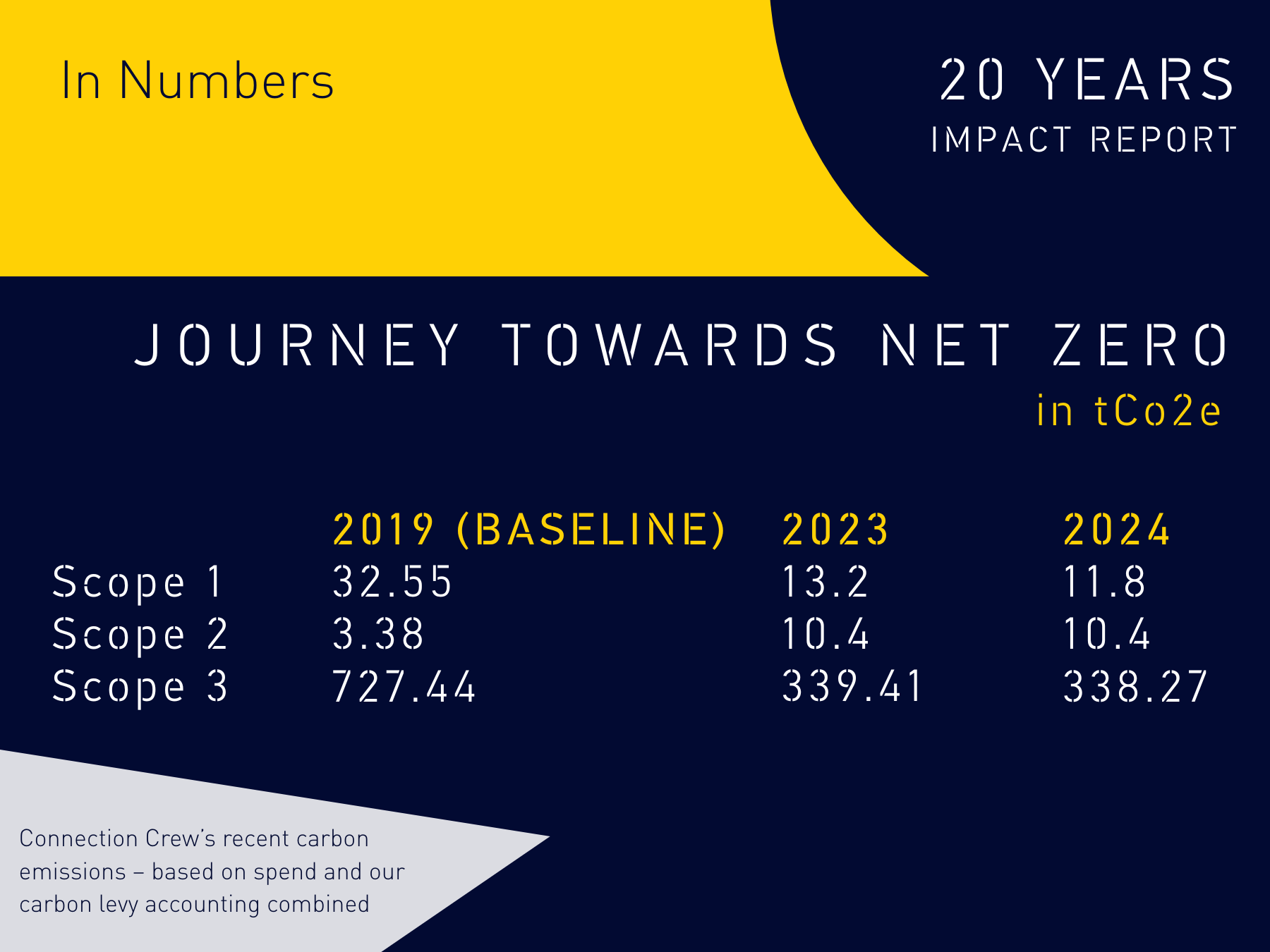
It was in 2020 that we first measured our Scope 1, 2, and 3 emissions to identify carbon hotspots, setting our baseline year of 2019.
We got going in 2021
We were part of the first cohort for Heart of the City’s ‘Climate for SMEs’ course, utilising their GHG Protocol aligned methodology for our baselining process.
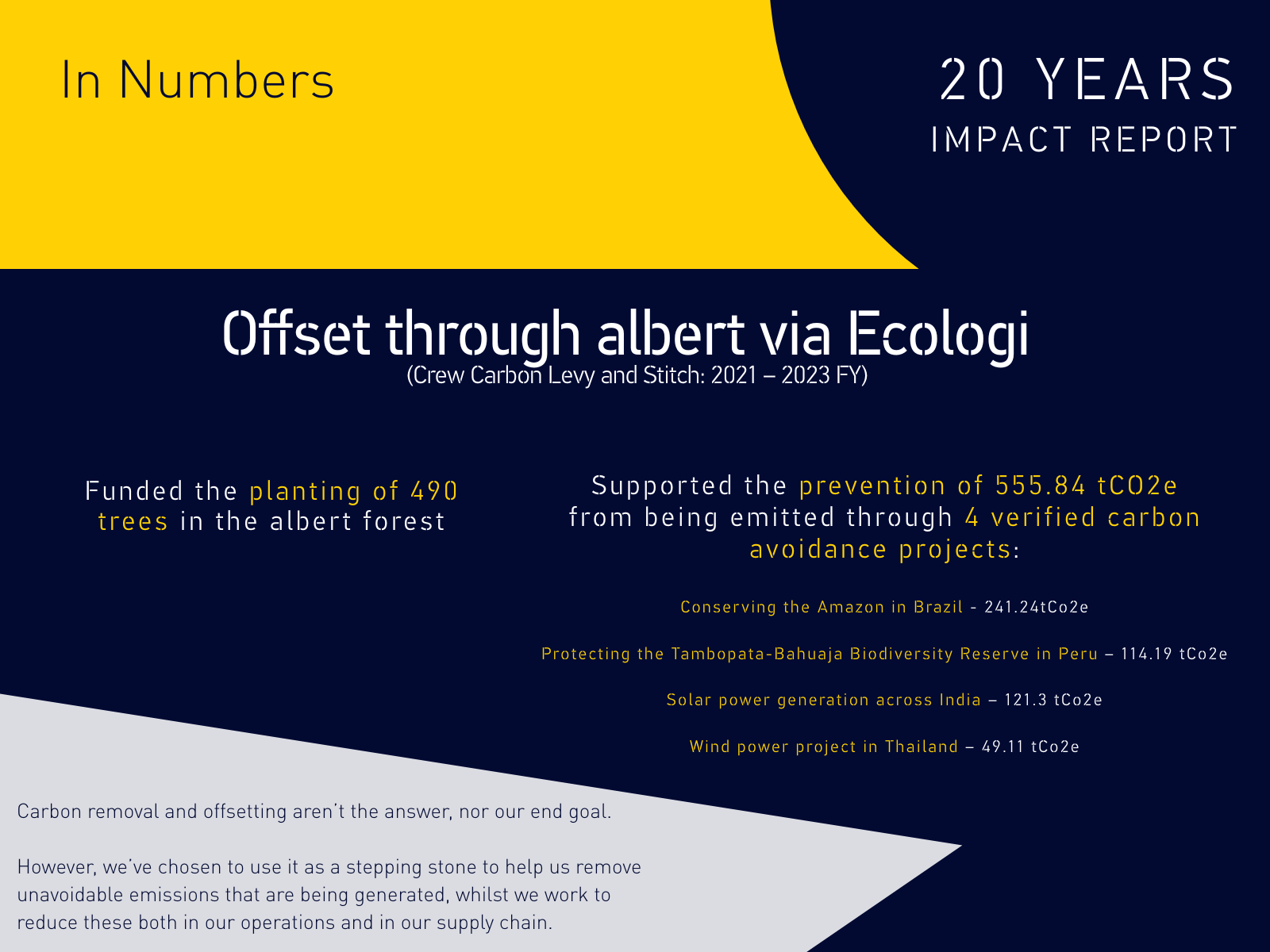
That same year, we signed up to a 100% renewable energy tariff with Octopus Energy, started the process to remove gas from our headquarters, and introduced our Crew Carbon Levy to offset carbon emissions generated through our crewing activities, removed through the We Are Albert Creative Offset Scheme via Ecologi.
(Offsetting is neither the answer nor our end-goal. We consider it a stepping stone whilst we continue our journey.)
2022 gave us an action plan
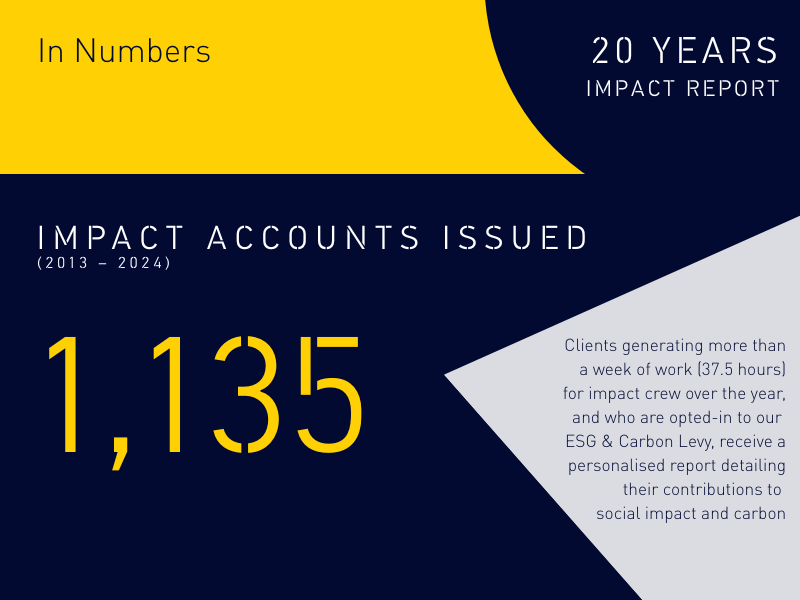
We continued our journey, creating and agreed a 2030 Net Zero action plan aligned with our ISO 14001 certification, added carbon reporting to our Impact Accounts, introduced new recycling practices (such as food waste bins), selected a new waste supplier, Greenline Environmental, and launched ESG Impact Reports for projects over £5k delivered by Stitch.
Our journey in 2023
We expanded our Environmental Policy to become our ESG Policy, began to plan shifts in our banking and pensions (to ‘greener’ providers), and launched an ESG focused crew survey to understand behaviour and preferences to inform our crew engagement programme.
We introduced an inventory management system for our materials to track the carbon footprint of materials used by Stitch: every item is weighed, measured, its tenure with us documented, and its end-of-lifecycle tracked by the 5 R’s and disposal — with key focus being increased circularity.
2024 was about people + planet
Starting with sharing our best loved vegan recipes for Veganuary, we used 2024 to push our internal carbon education piece further. We began to track impact suppliers and encourage better procurement choices; this saw the first iteration of our Supplier Code of Conduct.
We moved to a ‘greener’ pension plan, engaged more and more with clients about our contribution to their Scope 3 reporting.
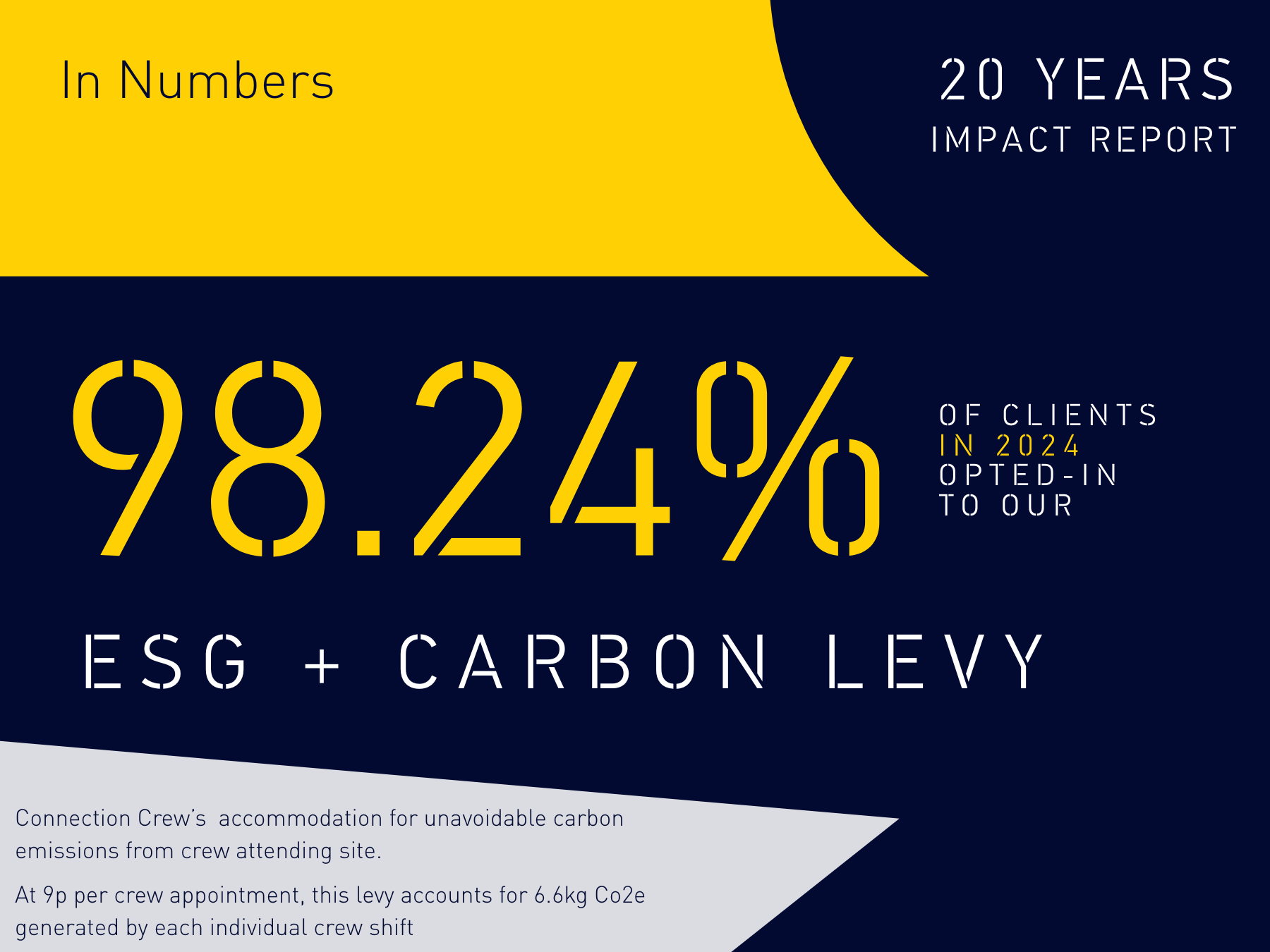
And we started our social- and environmental-focused roundtable series, gathering clients and key ESG industry professionals to discuss how small changes can have massive impact on people + planet. Following positive feedback and suggestions, our Crew Carbon Levy became our ESG + Carbon Levy, with and we set plans in place to begin the shift from offsetting, aiming for 100% in 2027.
In 2025, we took further steps to encourage a ‘just transition to Net Zero’
Following client input and engagement across industries, we put our behaviour change plans into action — 60% of funds generated from our ESG + Carbon Levy in 2024 were spent on initiatives to encourage ‘greener’ choices, starting with Forest Bike credits.
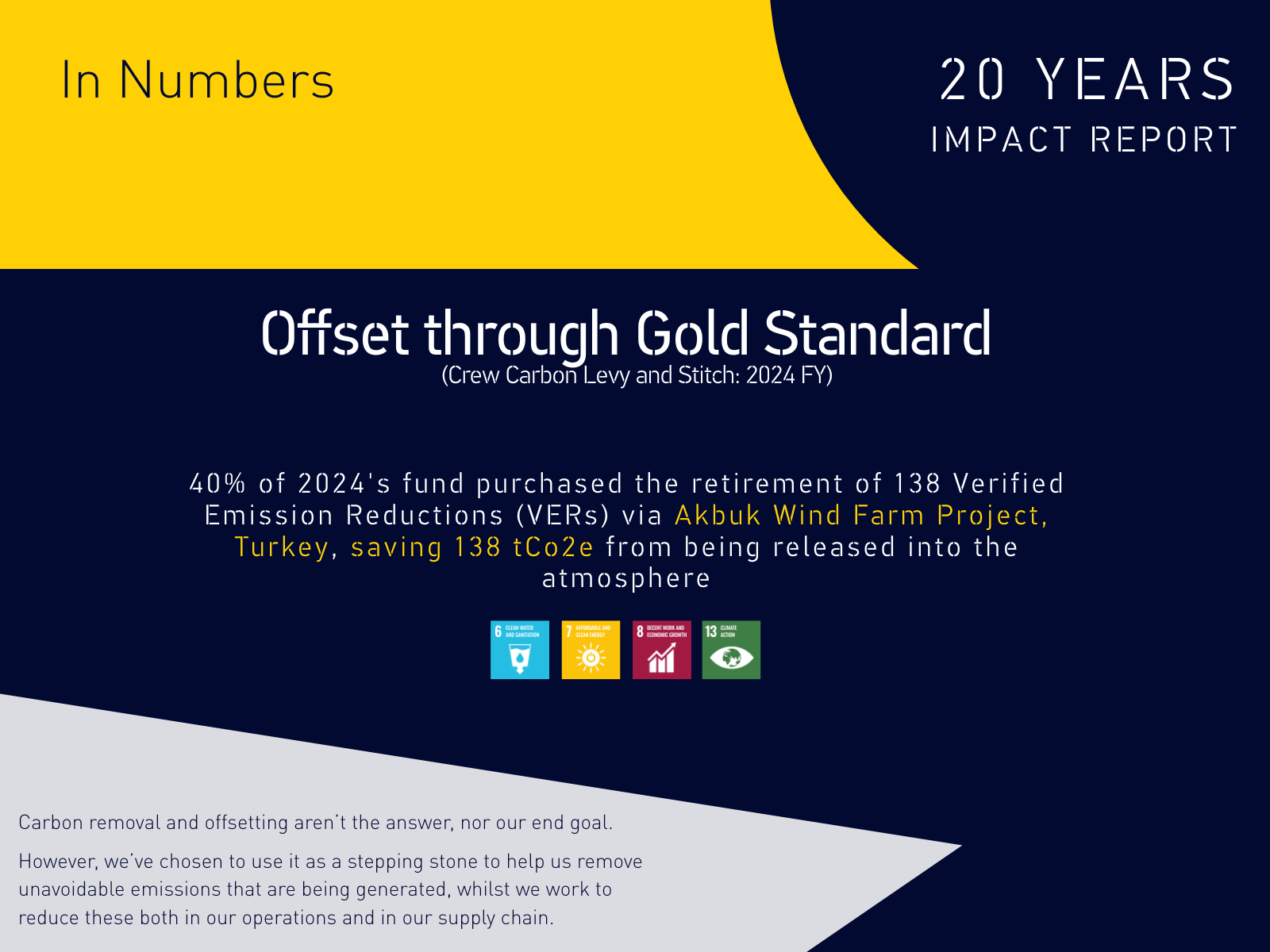
The remaining 40% was spent on offsetting carbon emissions through Gold Standard, continuing our preference for projects which help to build social impact as well as environmental — retiring 138 tCo2e Verified Emission Reductions (VERs) from Akbuk Wind Farm Project, Turkey.
This project contributes to UN SDGs 6, 7, 8, and 13.