
Roundtables Round-up: In Conversation for Change
How shared dialogue and collaboration are driving new ideas for people, planet and progress across our industry.
Over the past year, Connection Crew has brought together clients, partners and industry peers through a series of ESG roundtables - creating space to share, reflect and reimagine what a just transition could look like for the events world.
This feature captures the key themes, insights and momentum from those conversations - and why collaboration itself is part of the change.
Why We Brought the Industry Together
The roundtable sessions were designed as an open, practical conversation: how can we, as an industry built on creativity, problem-solving and determination, apply that same energy to sustainability, inclusion and fair work?
The discussions focused on Environmental, Social and Governance (ESG) priorities and their intersection with the gig economy - the flexible, freelance workforce that powers the events sector. Together, we explored what a just transition could look like: meeting Net Zero targets and rising costs while ensuring no one is left behind.
At their heart, these conversations were about connection - between environmental goals and social progress, between companies and crew, and between intention and impact.
The Urgency of Now: Cost of Living, Net Zero and Inequality
Across all sessions, there was a shared sense that time is short. The climate crisis is accelerating; the cost of living is rising; and the gap between the most and least secure workers continues to grow. Yet, “There’s definitely tension between aims to grow the sector and aims for Net Zero”.
While sustainability strategies are increasingly mainstream, social equity often lags behind. Many admitted that while environmental metrics like waste reduction and carbon reporting are embedded, social impact is harder to measure and resource: “It feels like we talk the good talk and also like clients don’t actually care.”
Yet the link between the two is undeniable. As one participant put it, “We can’t have a sustainable planet without sustainable people.” Poor pay, exhaustion and insecurity drive inequality and make it harder for people to engage with environmental goals. Climate action isn’t complete without fair conditions.
What We Heard in the Room
Across three sessions, dozens of organisations shared where they’re at, where they’re struggling, and where they’re heading. Some are already ISO-certified or B Corps, others are just starting out - often with one person carrying the ESG torch alongside many other roles and this becomes an added challenge: “the time pressure on small teams is immense.”
This diversity created a rich space for learning and exchange. Participants shared wins and barriers, from green pensions and electric fleets to maintaining momentum when budgets are tight.
We heard that:
Social impact is the hardest “S” in ESG to define and embed. Mental health, inclusion and pay are often seen as HR issues, not sustainability priorities.
ESG requires collaboration across supply chains. The freelance, project-based model makes it hard to align standards or ensure fair treatment.
Crew and freelance experience must be central. Real change means addressing the lived realities of those on the ground – the people building, lifting and setting up the events that make everything else possible.
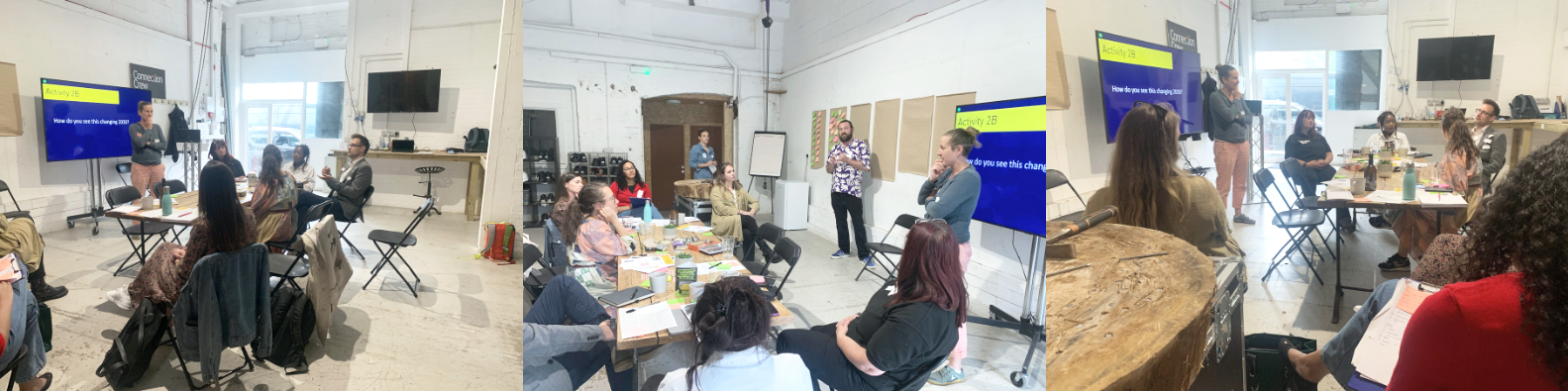
Roundtable July 2024
The Future of Crew: From 2024 to 2030
A recurring theme was the gap between today’s working conditions and the future we want to see. Crew in 2024 enjoy flexibility, camaraderie and creative work, but can also face low pay - only 4 / 5 other crewing companies are Living Wage accredited - long or irregular hours, limited support and physical strain. There’s pride in the work — but also frustration that it’s undervalued and often invisible.
Crew in 2030, participants hoped, will experience better planning, fairer pay, stronger wellbeing support, local hiring and recognition as a core part of the team.
Shared priorities for collective influence to make this happen included:
Early planning and better site communication
“Surely, we can all do our bit by planning more efficiently and supporting earlier planning. Less chaos means less work, less waste, and better conditions for everyone on site - including crew.”
Sustainability and carbon literacy in onboarding
Client and supplier education via “green riders”
Promoting low-carbon habits like car shares and refillable bottles
Integrating welfare — from washing facilities to fair rest breaks
“It seems like there’s a need for a dedicated welfare and wellbeing role…”
The message was clear: small cultural and logistical shifts can have a huge ripple effect. A well-briefed, well-supported crew makes for a safer, greener, more efficient site — and a stronger industry.
Turning the Lens Inward: The Carbon & ESG Levy
Connection Crew’s own carbon levy — first introduced to offset emissions from crew travel — became a focal point for discussion. Through the roundtables, we explored how it could evolve into a tool for wider change.
The result is the ESG & Carbon Levy, a model that redirects a portion of funds toward initiatives supporting both environmental and social wellbeing. The first project was simple but powerful: access to e-bikes for crew — encouraging active travel and reducing emissions. Connection Crew has tracked staff travel since 2022 and will report on its impact on both carbon and wellbeing.
Participants welcomed the idea - “It’s a service!” and “What’s the difference between using money on initiatives internally and giving to charity?” - and suggested further ways to reinvest levy funds:
Free or subsidised bike mechanic sessions
Mental health first aid training
Subsidised public transport
Durable workwear and safety gear
Shared meals, welfare packs or “crew perks” from surplus stock
Washing facilities for low-temperature cycles
“We want to do all these things, so let’s go one by one…”
Attendees stressed the importance of behavioural change over offsetting, and of tracking tangible outcomes — from carbon saved to stories of how initiatives help real people. As one participant noted, “It’s not just about cutting emissions, it’s about improving lives while doing it.”
The Power of Collaboration and Awareness
If one theme ran through every session, it was collaboration. The roundtables showed the power of shared knowledge and mutual learning. Many participants left with new energy, contacts, and ideas to take back to their teams.
The willingness to share candidly — what’s working, what isn’t, and what’s uncertain — built trust and momentum: “We need to be careful about being too enthusiastic and overblowing our aims or claims and greenwashing.” This openness will allow the sector to move forward collectively, not competitively.
Importantly, the sessions also revealed the impact attendees could have through their own work. Improving conditions for workers doesn’t just benefit the team on the ground — it actively contributes to addressing wider issues like homelessness and inequality. Seeing this connection made participants more aware of the ripple effect of their decisions and how collaboration can amplify that impact.
And while sustainability can feel daunting, it’s easier together. By pooling insights, aligning standards, and sharing supplier data, progress becomes achievable for everyone.
As the events world continues to rebuild, these connections matter more than ever. They remind us that behind every ESG target are real people — with stories, stresses, ambitions, and ideas worth listening to.
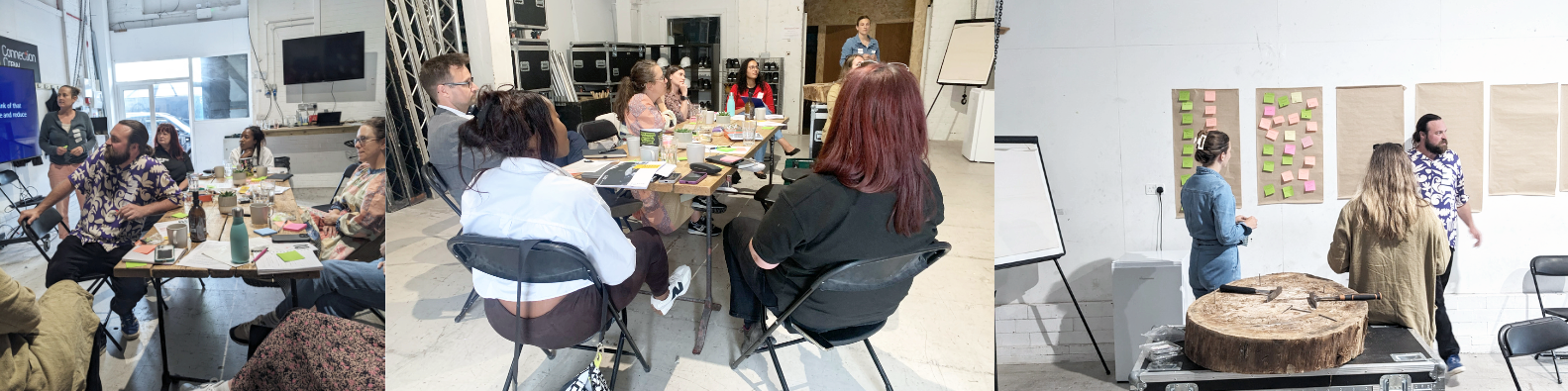
Roundtable July 2024
Why the Conversation Itself Matters
One key reflection is that part of the solution is the discussion itself. Creating space for dialogue has value beyond any immediate policy change.
The events industry is full of self-starters and logistical magicians who make the impossible happen daily. When that same energy is directed toward issues like homelessness, inequality and sustainability, progress accelerates.
The act of joining the dots, between environmental targets, social justice, wellbeing and site-level decisions, is where transformation begins. These conversations spark new thinking and remind us of the collective agency we hold:
As one participant said, “Making small steps is important. We’re not going to change the world overnight. Just be honest with what you’re doing” and: “This isn’t about grand gestures - it’s about what we can each do in our sphere of influence, today.”
Next Steps: From Dialogue to Collective Action
Each roundtable ended not with a conclusion, but with a call to keep the conversation alive. Attendees agreed on several key directions for the year ahead: Embed wellbeing, equity and inclusion within ESG roadmaps.
Trial inclusive venue and sites surveys to assess and drive accessibility and welfare forward
Increase collaboration and resource-sharing around supplier standards.
Champion the Living Wage and fair pay.
Support behavioural change through ongoing engagement, not one-off interventions
Explore the development of a ‘cultural contract’, an idea floated by one of our participants around expectations between different parties on site
For Connection Crew, the next step is to continue convening these sessions -creating space for honesty, learning and action. The aim is to turn insights into shared projects, pilots and collective commitments that raise standards across the board.
Because building a just transition will never be done by one company alone. It’s a team effort — just like every great event.
With thanks to all of our roundtable participants, for driving this conversation forward with us:
Hannah Blackstock – Massive (formerly)
Venetia Campbell - Eclipse
Tim Cracknell - Wise Productions (formerly)
Thi Dinh - The Bulb
Paul Fulcher - Rigging Services
James Hunter - Encore
Carina Jandt - Event Cycle
Laurence Johnson - Film London
Richard Owen - Brixton House (formerly)
Louise Palmer - Strata (formerly)
Phil Rae - Production Bureau
Matilda Riley - From Now
Laura Robinson - Event:decision
Victoria Robinson - Positive Experience
Rob Sansom - Broadsword
Cherise Scotland - emc3
Chris Smith - isla
Meg Strale - The Bulb
Elena Uvarova - Pixel Artworks
Will Watson - Steeldeck
Gabriella Weekes - Sleek Events
Phil (Philippa) Westland - OneTwo Agency