
From Surviving to Thriving: Connection Crew’s Journey and the Future It’s Shaping
Twenty years on, Connection Crew’s story is one of resilience, reinvention, and purpose in action. What began as a small social enterprise, founded within the Connection at St Martin’s homelessness charity and employing people affected by homelessness to work in events, has grown into a recognised leader in social enterprise, service to events and inclusive business. Through every challenge - from industry shifts to global crises - Connection Crew has held fast to its mission: to create good jobs that change lives.
This feature - From Surviving to Thriving - traces that journey through the words and reflections of CEO Warren Rogers and other core team members, exploring how Connection Crew has evolved, adapted, and continued to build a better, fairer way of working in the events industry since the publication of its 10 Year Impact Report – and how recent events have shaped its vision for the future.
Putting down roots in Brixton
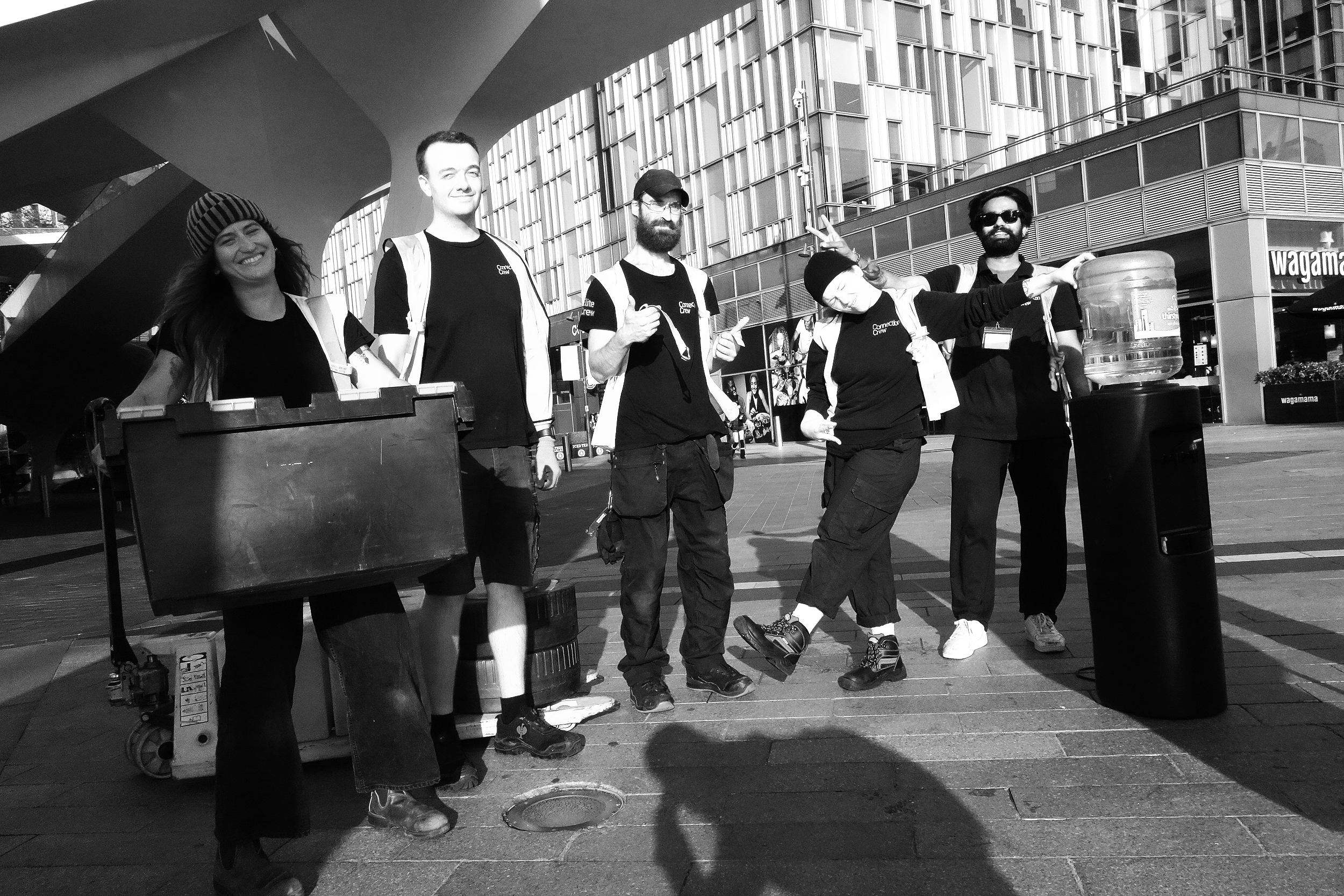
When the events industry was thriving, so was Connection Crew. Between 2016 and 2020, the business had moved from London Bridge to Brixton, secured investment from Big Issue Invest, and was on track for its busiest year yet. The move in 2018 brought new energy — a larger space, a training hub, and the first real foundations to build its Academy – a fun, hands-on work skills and event crew training programme for people affected by homelessness.
“It gave us the first opportunity to have our own training space and a small warehouse within the premises,” Warren recalls. “It was the first time we really started to think critically about our Impact programmes and how to grow their reach.”
By 2018, the company had doubled in size and ambition. Growth brought better structure and aspirations for the future. “We’d been at risk of being a very small enterprise where everyone threw everything at the wall to get things done,” Warren says. “This growth was the beginning of change for us as a business – we were growing up”.”
Connection Crew was planning national expansion, setting out new business goals, and preparing for 2020, what was set to be its biggest year yet.
Then the pandemic hit.
Human Decisions in a Time of Crisis
“When we reflect on the pandemic,” Warren says, “could we have done things better? I’m not sure. Could we have done things differently? Possibly. But what would have been the ramifications to the team — many of whom are still with us today?”
Connection Crew’s approach through COVID-19 reflected its values. “As a social enterprise,” Warren continues, “we took advantage of government furlough schemes to protect jobs. Making redundancies wasn’t a decision we took quickly — and I’m really pleased that many of our crew and office team are still with us now.”
At every stage, choices were made for people, not just profit. “These were probably human decisions rather than commercial ones,” he says. “But without people, you don’t have the warmth, depth of knowledge, or the understanding that makes Connection Crew what it is.”
Robin Beshoori, Senior Account Manager points out: “What stood out and was tested in that period was how adaptable our crew were. We leaned into it. We were turning our hands to facilities work, basic construction, anything that would keep us moving and keep the service going.”
The company had to give up its premises, renegotiate its investment terms, and rebuild. “We looked down the barrel,” Warren admits. “Could the business afford to keep supporting staff and pay the overheads? In reality, we couldn’t.” Yet even in that moment, the purpose of the organisation — to create jobs and help people affected by homelessness — remained non-negotiable. “It’s the purpose of the business to get people back into work,” he says. “Since then, we’ve created more jobs for people affected by homelessness than before the pandemic. Now through our Theory of Change, we’re examining how ‘good’ that opportunity is.”
A Pivot With Purpose: Growing Digital
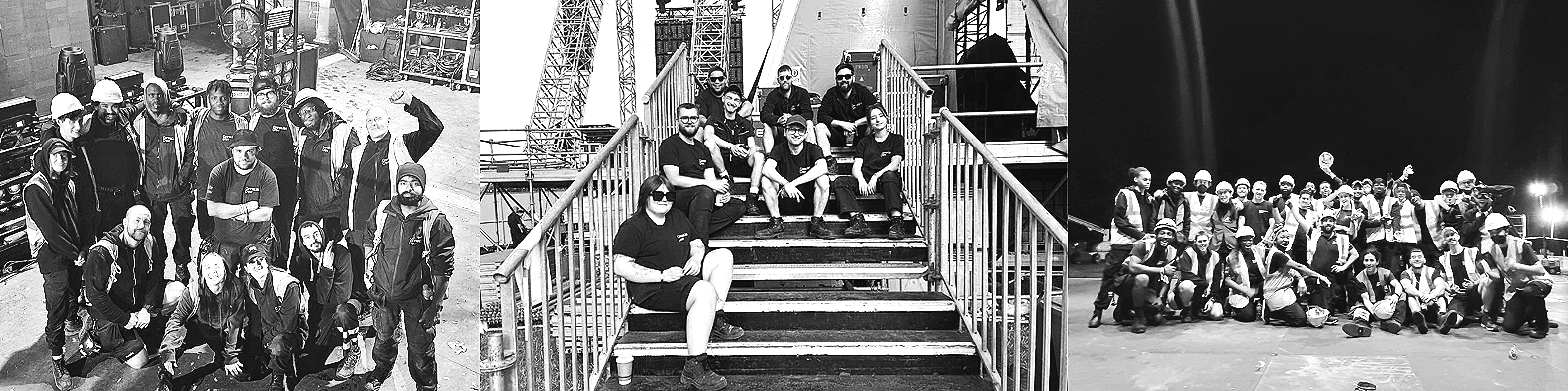
When live events stopped, Connection Crew had to find another way. “We needed to look at our experience, our clients, our staff, our resources - and come up with other ways of generating revenue,” Warren recalls. That process accelerated the creation of Stitch, the production arm of the business.
The early days were scrappy and inventive - turning the warehouse into a temporary studio, hosting livestreamed events, even creating a small gym for furloughed staff. But the big turning point came through Social Enterprise UK’s Buy Social Corporate Challenge, which opened doors to corporate procurement teams looking for suppliers who could deliver both quality and impact.
“We were speaking directly to procurement teams in a way we never had before,” Warren explains. “So we thought: we’ve been building events for 15 years - why not design and produce them too?”
Stitch was born from that realisation: a bold decision to move from crew to creator. “We’d shyed away from this before because we didn’t want to tread on any clients’ toes. But, frankly, we had to be brave,” Warren says. “We had to do what it took to get the business back from the economic impact of the pandemic. And we focused on the Buy Social Corporate Challenge market to avoid any cross-over with our existing crew clients.”
Robin echoes this here: “Stitch wasn’t something we planned — it emerged because the market asked for it. When BSCC invited us in, they didn’t need crew, they needed a production solution, and in COVID that turned into a digital solution. That combination of necessity, recommendation and timing pushed us to evolve.”
The new offering combined technical production with purpose - measuring the social and environmental impact of each project. The team pledged to reach net zero by 2030, hired a sustainability practitioner, and started reporting back to clients on the difference their spend made. “Marrying social and environmental impact together and reporting it back was a great move for us,” Warren notes. “It allowed us to win work that we previously wouldn’t have been able to access. We’d been reporting on social impact to our event clients for years, but this allowed us to expand our reach and influence.”
Camilla Marcus-Dew had recently joined the team, a social enterprise founder and PIEMA qualified sustainability practitioner: “When Stitch emerged, what excited me wasn’t just a new revenue stream – essential for survival at that stage – but also the scale of the opportunity. We weren’t just patching the business back together; we were designing what a future-facing, impact-driven production arm could look like.
That’s when I started asking the team: if we were operating as a £10 million business, how would we behave? What choices would we make? The period of reflection and Stitch gave us permission to think that boldly - to build something that combined creativity, technical delivery, and purpose from day one.”
That decision proved vital. “If we hadn’t seen the Stitch opportunity, we might not have survived the pandemic,” Warren admits. Stitch didn’t just help the business recover — it helped it evolve. “It’s allowed us to embed environmental aims alongside our social mission. Bringing those two together makes our offer stronger.”
Stitch has now created tangible new jobs - full-time, Living Wage roles within Stitch for those who’d come through the Connection Crew and the Academy. “One of the challenges for our crew is that event work can be a stepping stone,” Warren says. “Now, with Stitch, we can and have created full-time roles for people who want to grow in the industry.”
When Pressure Drives Progress
As the sector roared back to life in 2022, Connection Crew faced its toughest test yet — huge demand, but half the workforce. “We delivered our biggest year to date with half the resources,” Warren recalls. “It was taxing, but it pushed us to work harder, find new partners, and rethink how we operate.”
Robin reflects on that time: “The whole sector was in a strange place. A lot of experienced people had left - some of our long-standing crew moved and never came back - and suddenly junior project managers were running huge shows because there was no one else. We felt that pressure too. We supported our core team as far as we could, but we still had to rebuild from scratch in some areas.
Quality inevitably took a hit across the industry, and we were no exception — but we owned that and we’ve worked relentlessly to raise the standard again. What got us through was remembering that the service comes first. No matter how tough things were, we never lost sight of that – without the service there is nothing.”
That rethink led to deeper investment in data, systems, and transparency. “We effectively ripped up everything we were doing pre-pandemic and rewrote how we were going to operate,” Warren says. “We became a business that leaned into the skill sets of individuals — listening, learning, and evolving together.”
It was also a period of personal transition. Charlie, Warren’s co-director of 15 years, stepped down, leaving Warren as the sole leader. “That was a very challenging time. Charlie and I were creating events together in our twenties and then we built Connection Crew together.” he admits. “So, to lead Connection Crew into its next era without Charlie was daunting. I couldn’t have done it without support from coaches, mentors, and colleagues.”
The experience reinforced the importance of shared leadership and strong governance. “Finding the right people for your team and your board — people who believe in your mission but can also support commercial growth — is critical.”
A Better Business, Not Just a Bigger One
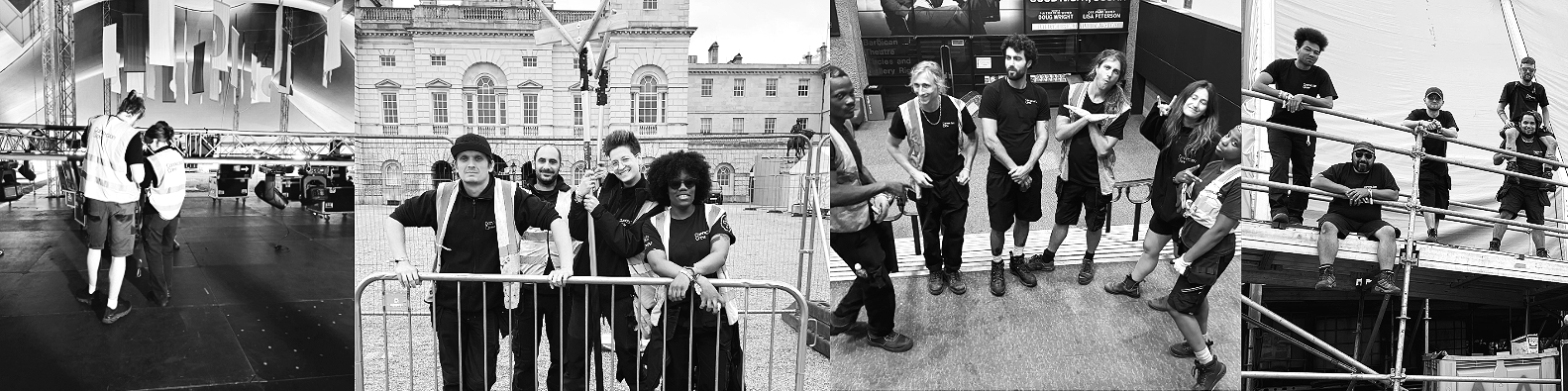
Looking forward, the aim isn’t unchecked expansion - it’s depth, stability, and quality. “You can chase growth for growth’s sake,” Warren says, “but it’s really about running a more sustainable, effective business - doing what we do but doing it better.”
"What matters most to me is looking after the people, the relationships, the purpose behind it all,” Charlotte Scotland, ESG, Data and Communications Manager says. “The more work we do, the more impact we can have, the more good we can deliver for people and planet. As we evolve and innovate, we need to keep sustainable growth in mind. For 20 years, Connection Crew has proved that business can be both successful and meaningful - and that's what we're taking forward into the next 20.”
That commitment is visible in the company’s drive for accreditations like B Corp, ISO standards, and Living Wage recognition.
Camilla explains: “The sustainability work we began through Stitch forced us to hold a mirror up to the whole organisation. Connection Crew had always been a values-led business - Living Wage, social mobility and equity at the core - but we weren’t telling that story the way the corporates buying Stitch services expected to see it.
It pushed us to get accredited, to be transparent, and to own the things we’d been doing quietly for years. That confidence has been a real shift. We’re not just talking about doing the right things - we’re proving them, and we’re proud of it.”
It’s also reflected in its new Theory of Change - an evolution of the Brixton model, now more robust and designed to deepen impact across lives, careers, and industry.
As Warren puts it: “It’s about creating more full-time, tangible, Living Wage jobs for the people coming through our training programmes — and making sure we build pathways that last.”
An Industry Waking Up To Its Potential
Warren believes the events industry is ready for change. “The sector understands there’s a place for us to generate less footprint, to be more environmentally friendly, and socially conscious,” he says. “But those buying from the sector - that’s where the work needs to be done.”
He points to procurement and contracting as the next frontier. “Our sector’s ready to deliver,” he explains. “But buyers - especially in corporate and public sectors - need to embed social and environmental value at the heart of their procurement, not as a tick-box exercise.”
For Warren, that’s where the next shift lies: in using business itself as a vehicle for change. “If we can influence how people act - in the workplace, in their supply chains, and with their daily choices - that’s where the real impact happens.
For Camilla, it’s about joining the dots and nudging the brief: “Events suppliers like us don’t always get to set the brief - but we can influence it. Stitch showed us the power of nudging clients toward better choices: asking the right questions, putting sustainability into the conversation early, and showing that responsible production doesn’t limit creativity. With the Procurement Act pushing transparency and social value across supply chains, our role as advisers becomes even more important.”
From Crisis to Confidence
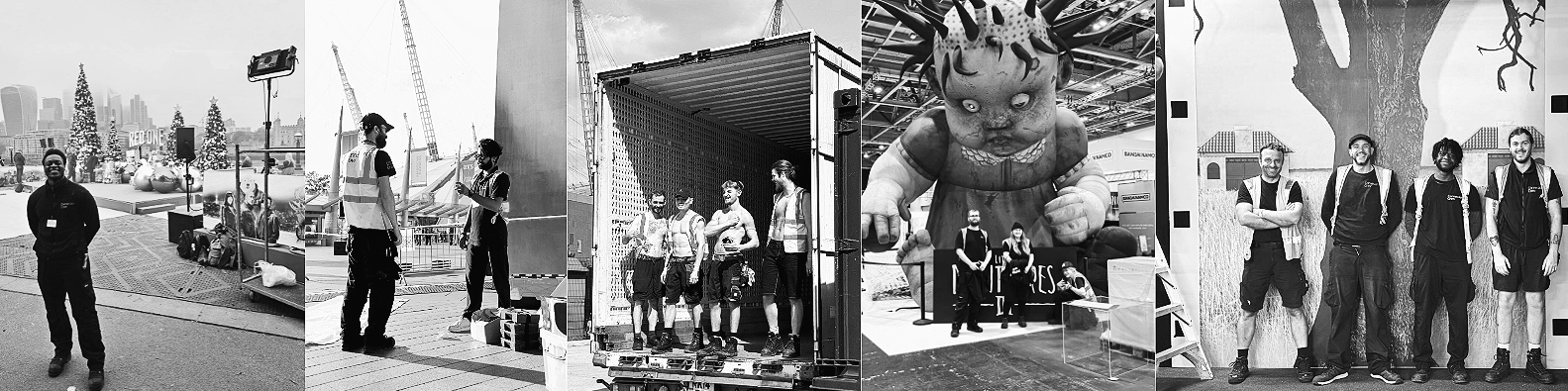
Connection Crew and Stitch today stand as stronger, more balanced businesses — commercially sharp, socially focused, and guided by experience hard-won. “It takes time to realise the ambition of a mission-led business,” Warren reflects. “You shouldn’t be afraid of the hard work. It takes three to five years to build anything.”
Transparency, shared learning, and purpose-driven leadership remain central. “Sharing the good, the bad and the ugly gives everyone visibility and a voice” he says. “You can’t do it alone. But if you lean into support, listen, and stay true to your purpose — you can come back stronger.”
And that, perhaps, is the essence of Connection Crew’s story: from surviving to thriving, not by chasing growth, but by doing business better.
Closing thought
Today, Connection Crew’s impact reaches far beyond the events it services. It’s measured in people — those who’ve found stability, confidence, and new opportunity through work; in clients who’ve chosen to partner for purpose as well as performance; and in an industry beginning to value the power of ethical supply chains.
As Connection Crew looks ahead to the next chapter, its focus remains clear: to continue raising the standard for what good work looks like — for people, for partners, and for the planet.
Twenty years in, the mission remains the same - but the ambition has never been greater or more urgent.